17-11-2025

The WBIF is a unique platform for coordination and cooperation that integrates various forms of non-reimbursable and reimbursable financing for public and private sector investments in the Western Balkans. Its main goal is to support socio-economic development in a collaborative and flexible manner, in line with the 'Team Europe' approach. The WBIF serves as the primary vehicle for delivering and implementing the Economic and Investment Plan (EIP) and is the main channel for advancing investments as part of the Growth Plan for the Western Balkans. Furthermore, it has been recognised as a best practice in European financial support for development and is responsible for the governance and operations of the European Fund for Sustainable Development Plus (EFSD+) in the Western Balkans.
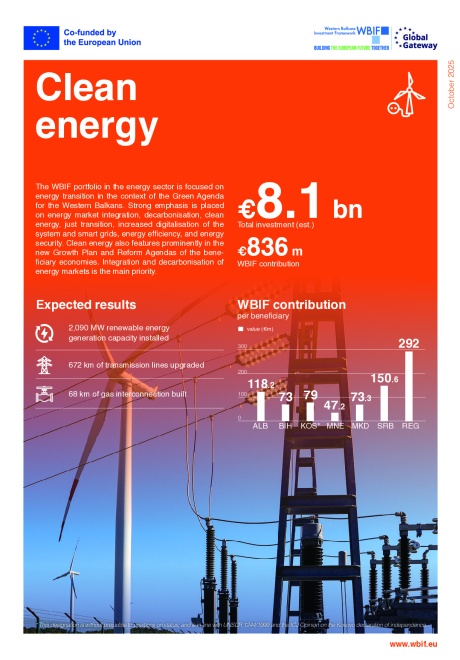
By blending funds from the EU's Instrument for Pre-accession Assistance and the Reform and Growth Facility with contributions from bilateral donors, beneficiaries, and loans from partner financial organisations, the WBIF supports strategic projects and programmes in six key areas: sustainable transport, clean energy, environmental protection and climate action, digital future, private sector competitiveness, and human capital development. All investments are aligned with structural reforms aimed at facilitating the twin transitions to a green and digital economy in the region.
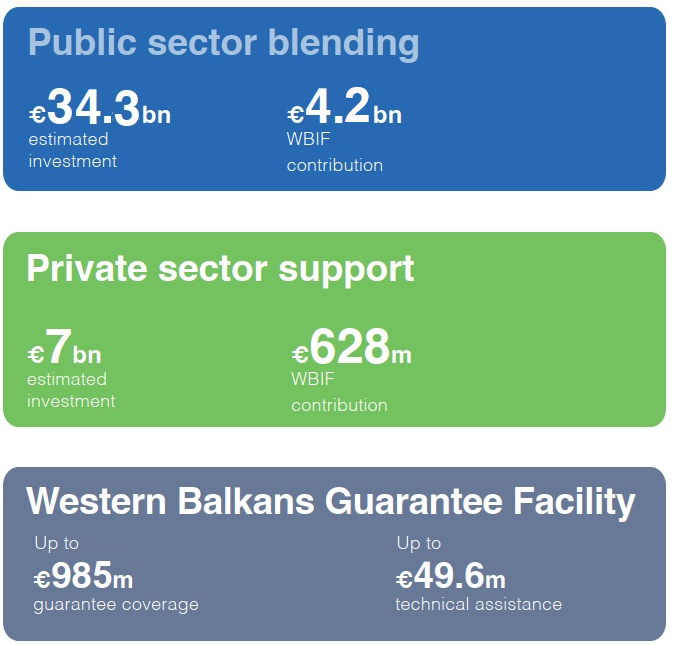
WBIF at a Glance 2008-2025
 Sustainable transport
1,022 km of new roads
 Clean energy
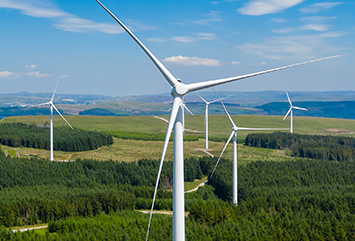
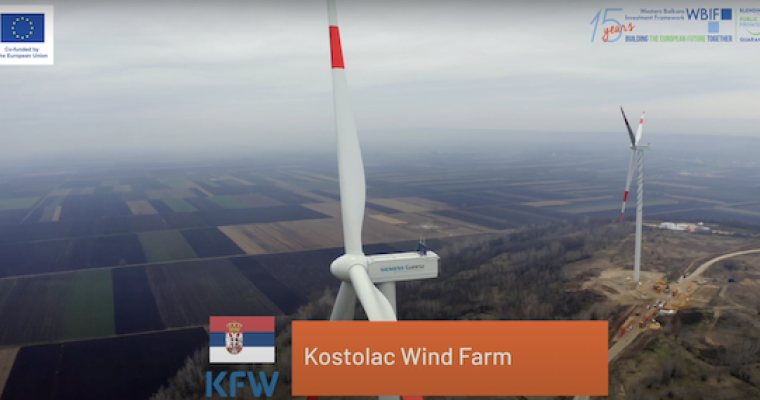
187 MW renewable energy installed
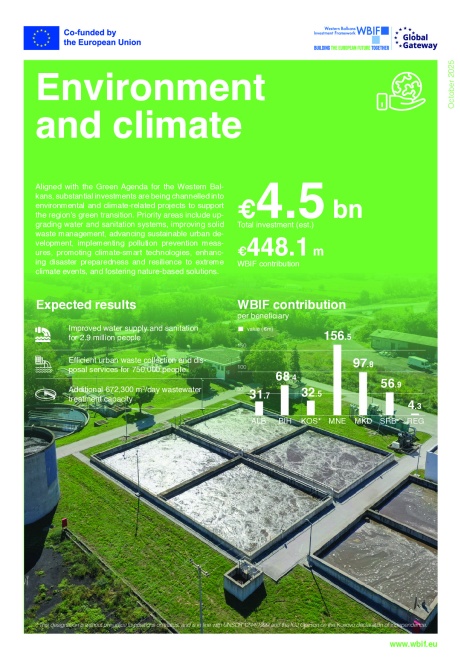
 Environment & climate
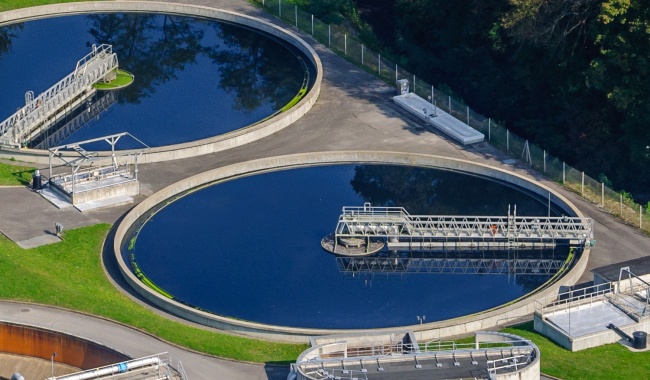
2.4 million people with access to improved drinking water and sanitation
 Private sector
308,137 MSMEs supported
 Human capital
96,600 students benefitting from better schools annually
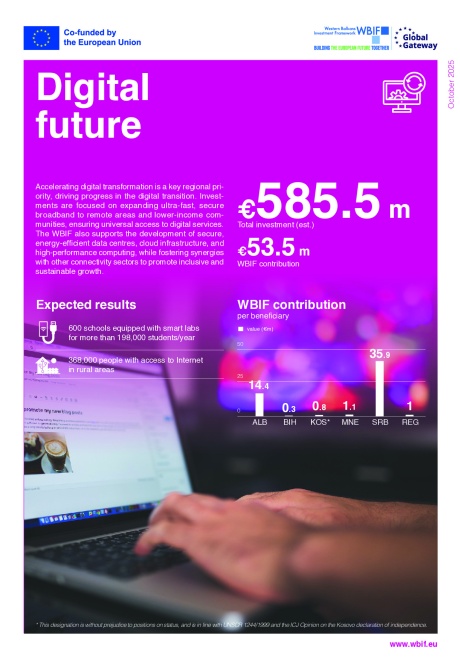
 Digital future
Implementation of Digital Agenda for the Western Balkans
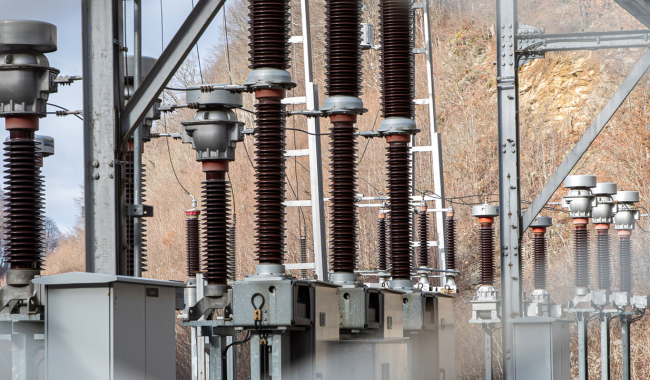
In 2015, the EU embarked on the ‘Connectivity Agenda’ to harness investment for improving transport and energy infrastructure in the Western Balkans. In the transport sector, those investments target key road and rail routes, inland waterways, and key ports. In the energy sector, they involve electricity and gas transmission, as well as the generation of renewable energy.
The Green Agenda follows the priorities established by the five pillars covered by the European Green Deal. The objectives of these pillars should be pursued through concrete actions and supported by mechanisms and financial instruments set out in the following sections:
Read More