
Running water on tap in Jajce
As works on a new water supply system in Jajce Municpality are coming to an end, Mayor Edin Hozan presented key elements of the project to a Norwegian delegation on 13 November 2025.
The delegation, led by Stefan Almehagen Sandstad, Deputy Head of Mission of the Norwegian Embassy in Bosnia and Herzegovina, represented bilateral donors to the Western Balkans Investment Framework who, along with the EU, co-financed the Water and Sanitation (WATSAN) programme in the Federation of Bosnia and Herzegovina (FBIH).
The WATSAN FBIH Programme was launched in 2008, to assist 20 smaller-sized municipalities develop sustainable water and sanitation services. The threat to public health from inadequate access to safe water is critical, with only 60% of the population connected to a public water supply.
Through this project in Jajce new source water intake was built, together with 5 reservoirs and 29 kilometres of pipelines, extending the distribution network to 11 settlements. As a result, around 11,000 residents now have safe and reliable water supply to their homes.
The total estimated investment of the project is €8.9 m, including €1.2 m Bilateral Donor contribution through WBIF.
Senad Vuković, a representative of the Kuprešani settlement, described the difference it has made: “We used to have a small local water system with irregular supply - especially in the summer - and poor water quality. People had to find their own ways to meet their needs, either by arranging water deliveries by tanker or carrying canisters themselves”.
A representative of Bistrica settlement, Safet Varenikić, added: “I believe that people would continue to leave this area if we did not have a safe and continuous water supply. I’m sure this project will increase the number of returnees to our villages and help us develop more small businesses and farms”.
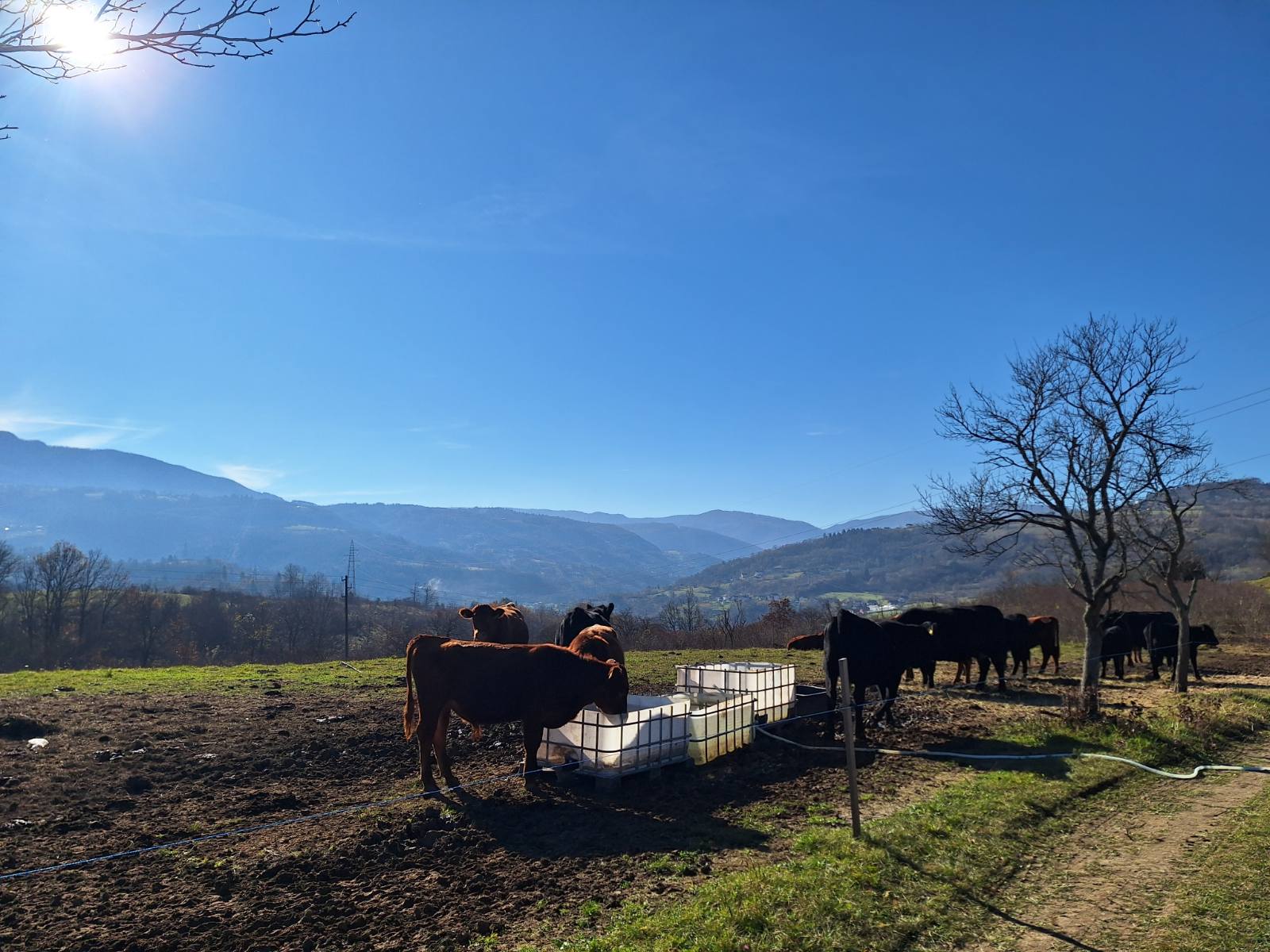
Besides daily domestic needs, the water will also support agriculture and farming, a cornerstone of livelihoods in the region. Zvonko Dramac, a local farmer from the Podmilačje settlement - and returnee from Germany - said: “This project means everything to me and my family. I started a farm this year, but all summer I had to bring in additional water for the animals by tanker. It was time-consuming and expensive. I’m looking forward to finally having enough running water whenever I need it”.
Apart from the construction of needed facilities and reconstruction of existing water supply and sanitation systems, including wastewater treatment plants, the WATSAN Programme uses investments in water and wastewater infrastructure to improve the living conditions of the population, ensure access to continuous water supply and sanitation services, and implement environmental protection measures in compliance with the obligations of EU accession and legislation harmonisation.
---
About WBIF Bilateral Donors
The WBIF Bilateral Donors contribute directly to the Western Balkans Investment Framework Joint Fund in support of a sustainable and green transition in the Western Balkans. The Bilateral Donors are actively involved in the WBIF governance and operations to ensure concerted and coordinated efforts. They continue to support small scale yet high impact projects.
About WBIF and Global Gateway
The Western Balkans Investment Framework (WBIF) contributes directly to Global Gateway, the EU’s strategy to boost smart, clean and secure connections in digital, energy and transport, while strengthening health, education and research systems worldwide. Global Gateway aims to mobilise up to €300 billion worldwide in investments through a Team Europe approach, bringing together the EU, its Member States and financial institutions to leverage investments for a transformational impact.